
the fishery
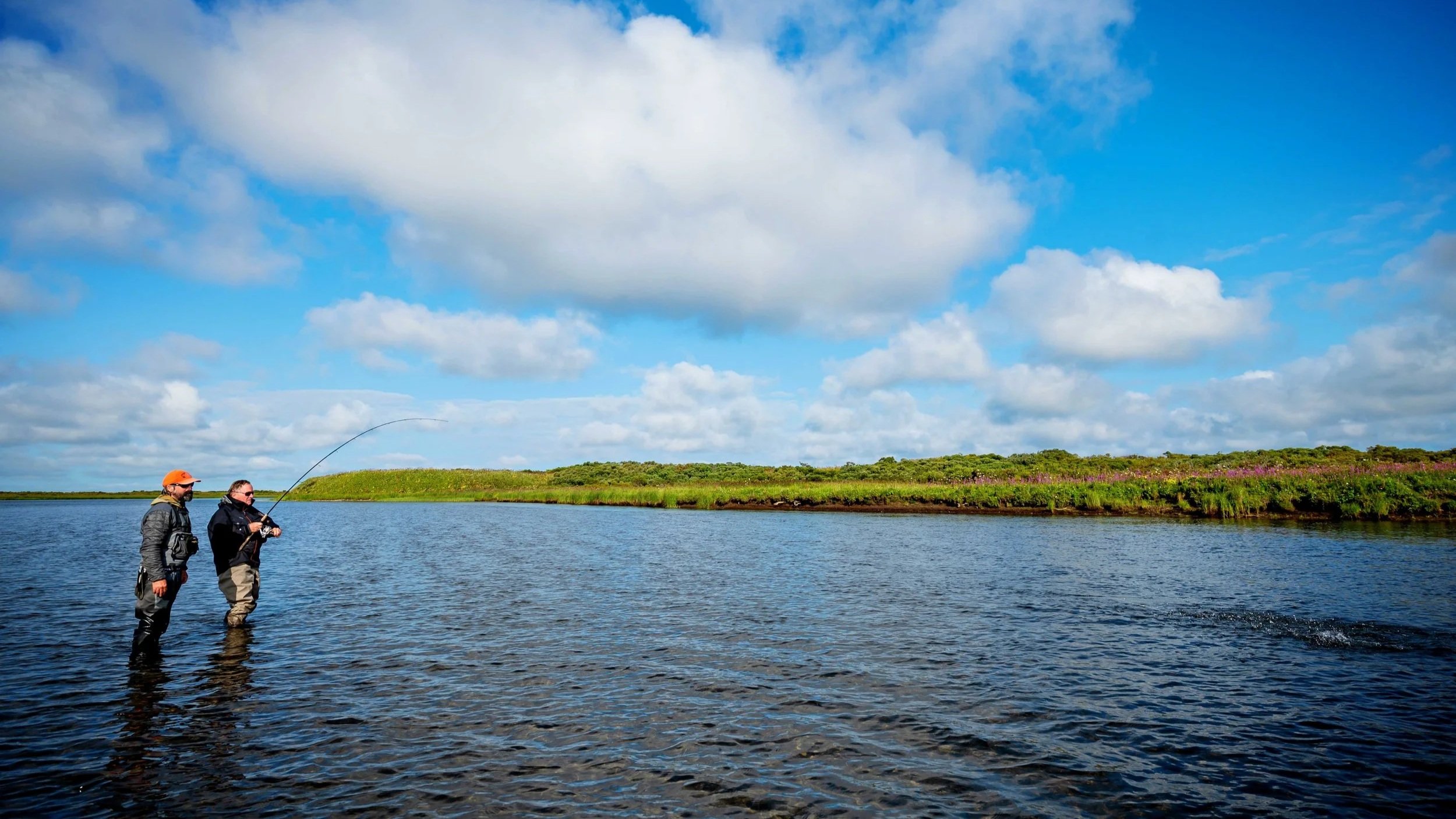
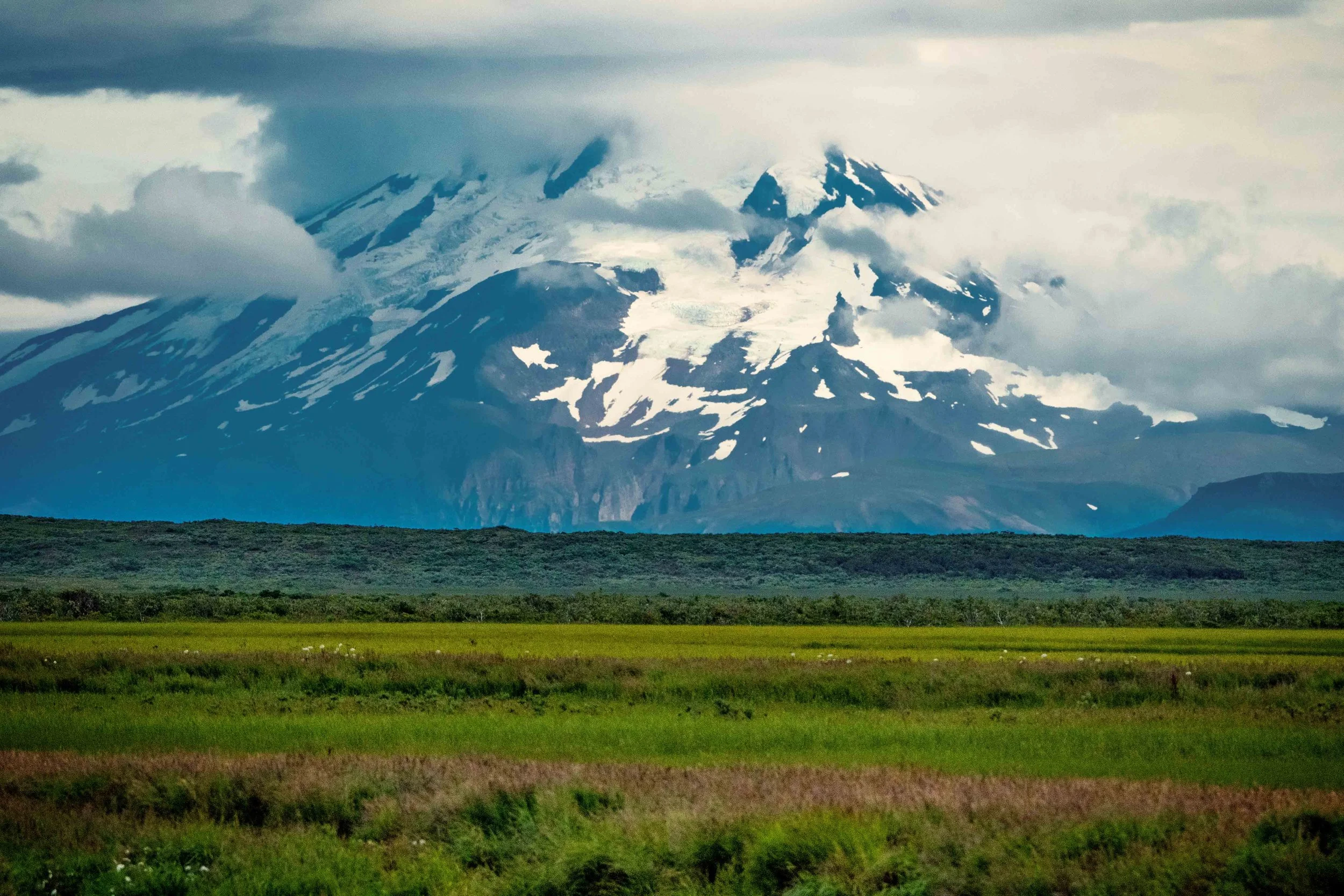
Lava Creek sits on wide, shallow, low-gradient rivers on the Alaska Peninsula, the kind of water that's nearly vanished elsewhere.
A firm, sandy bottom, laid down by ancient volcanic eruptions, means comfortable wading in a gentle current instead of fighting your way across mossy boulders and whitewater.
Holding runs are rarely more than six feet deep, and most can be covered with a cast of fifty feet or less. No chucking heavy lines all day, no wading to your armpits. If you can make a reasonable cast, you can fish here, whether it's your first season on a spey rod or your thirtieth. And you won't be competing for water with other lodges: the best runs are yours, every day of the week.
seasons
Early June – late July
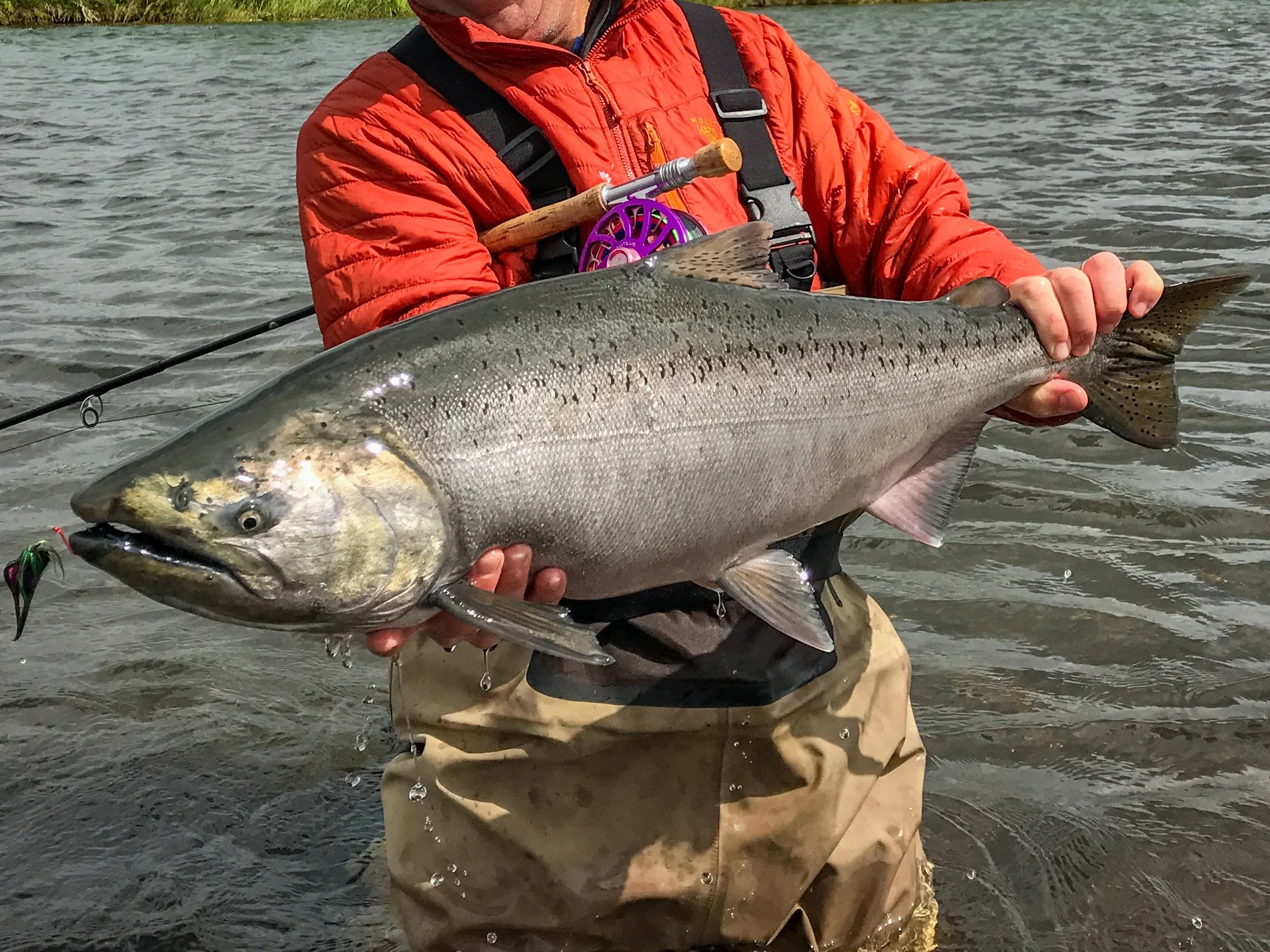
The Alaska Peninsula grows kings in water that almost doesn't exist anymore. Our home river is wide and low-gradient, with a firm bottom of volcanic cinder laid down by ancient eruptions — no slick boulders, no churning whitewater, just a forgiving bottom you can wade with confidence. That geology is the whole story: it's why the fishing here feels civilized while the fish themselves are anything but.
A typical run sets up to let you stand on a shallow sandbar and cast toward the cut bank where kings hold and rest. The best holding water is rarely more than six feet deep, which changes everything about how you fish it. There's no chucking gargantuan flies on ultra-heavy sink tips all day — we fish T-14 MOW tips with unweighted or lightly-weighted flies to get in the zone, a setup that keeps anglers of every casting ability in the game. Most of our guests are happiest on an 8- or 9-weight spey rod, though 9- and 10-weight single-handers fish well too, depending on preference.
Kings are enigmatic — the same fish that ignore a run one morning will pile into it by afternoon. Reading that puzzle is what our guides live for, and when one or two runs start fishing better than the rest, the guide staff coordinates so every angler gets a turn through the productive water. It's a cooperative approach that only works because the lodge is small. You'll spend your week chasing one of the last great king fisheries on earth, and you'll have it to yourself.
king season
Late July – early August
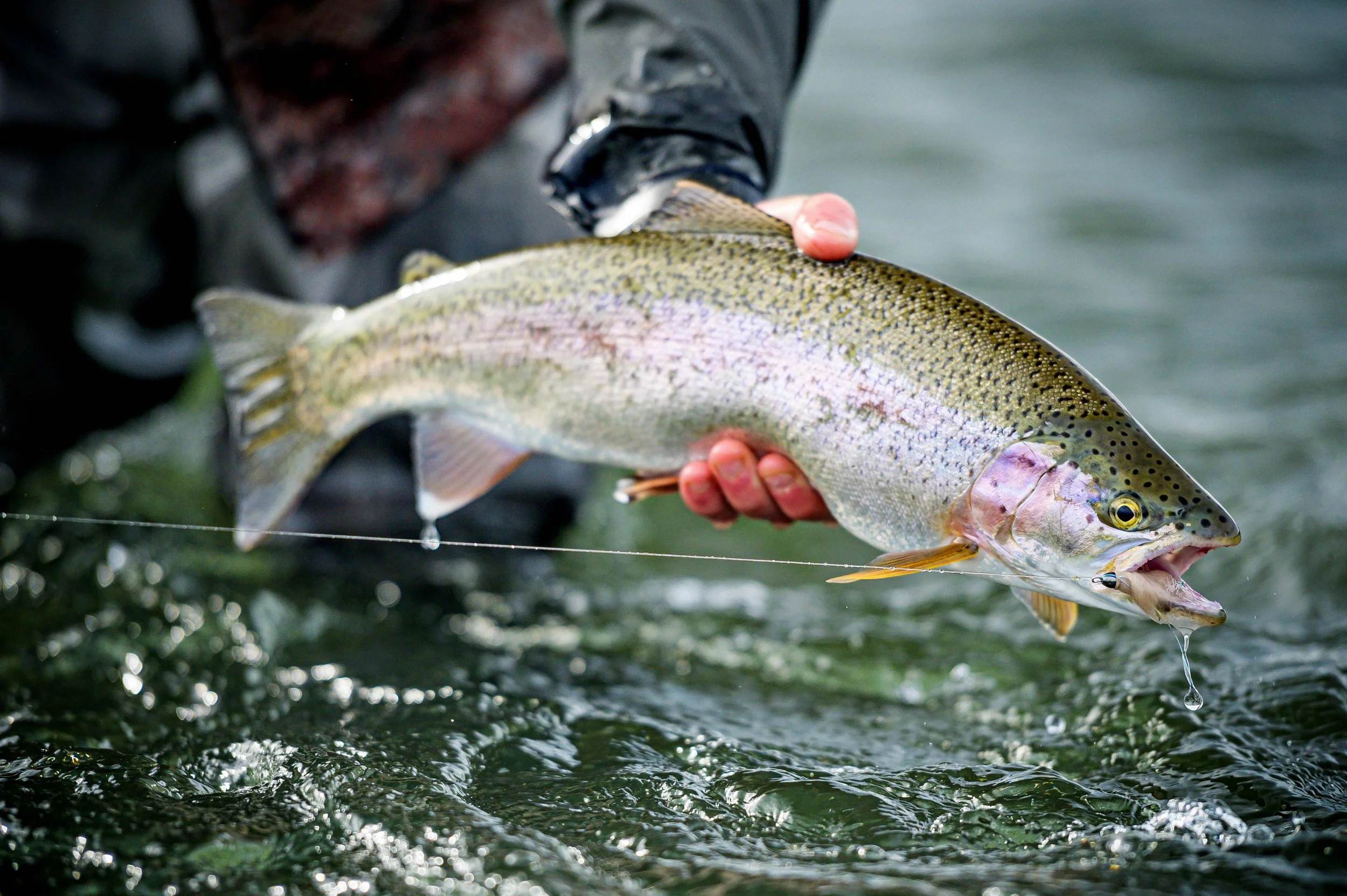
Five seasons ago, the lodge sent guides up the river on a hunch — was there a real trout fishery in the upper reaches? The answer came back better than anyone hoped. Today those resident rainbows are a program of their own: strong fish that hammer skated mice and dead-drifted flesh, fished from boat or bank depending on conditions, on water you'll have entirely to yourself. There's no shortage of trout fishing in Alaska, but a whole river to yourself is the rare part.
As salmon begin dropping eggs into the spawning gravel, the dolly varden line up behind them to gorge. Some come through chrome-bright and fresh from the salt; others wear full spawning dress — electric-blue flanks, pink spots, orange bellies. A bead that imitates a loose salmon egg is all it takes, and the action turns hot and heavy. The best of it happens on a flyout to a smaller tributary: a crystal-clear mountain stream where you walk and wade behind pods of crimson sockeye, picking off big dollies and trout that are often holding side by side.
Then there's the chum — pound-for-pound the hardest-pulling fish in the river, and we'll argue that with anyone. They run the lower river near the salt, so you're into chrome fish just hours removed from the Bering Sea with minimal time in the boat. They eat swung and stripped flies aggressively and jump nearly like silvers. In some years an early push of silvers or a late pod of kings overlaps these weeks, stacking one more option onto what's already the most varied fishing we offer.
the middle weeks
Mid-August – late September
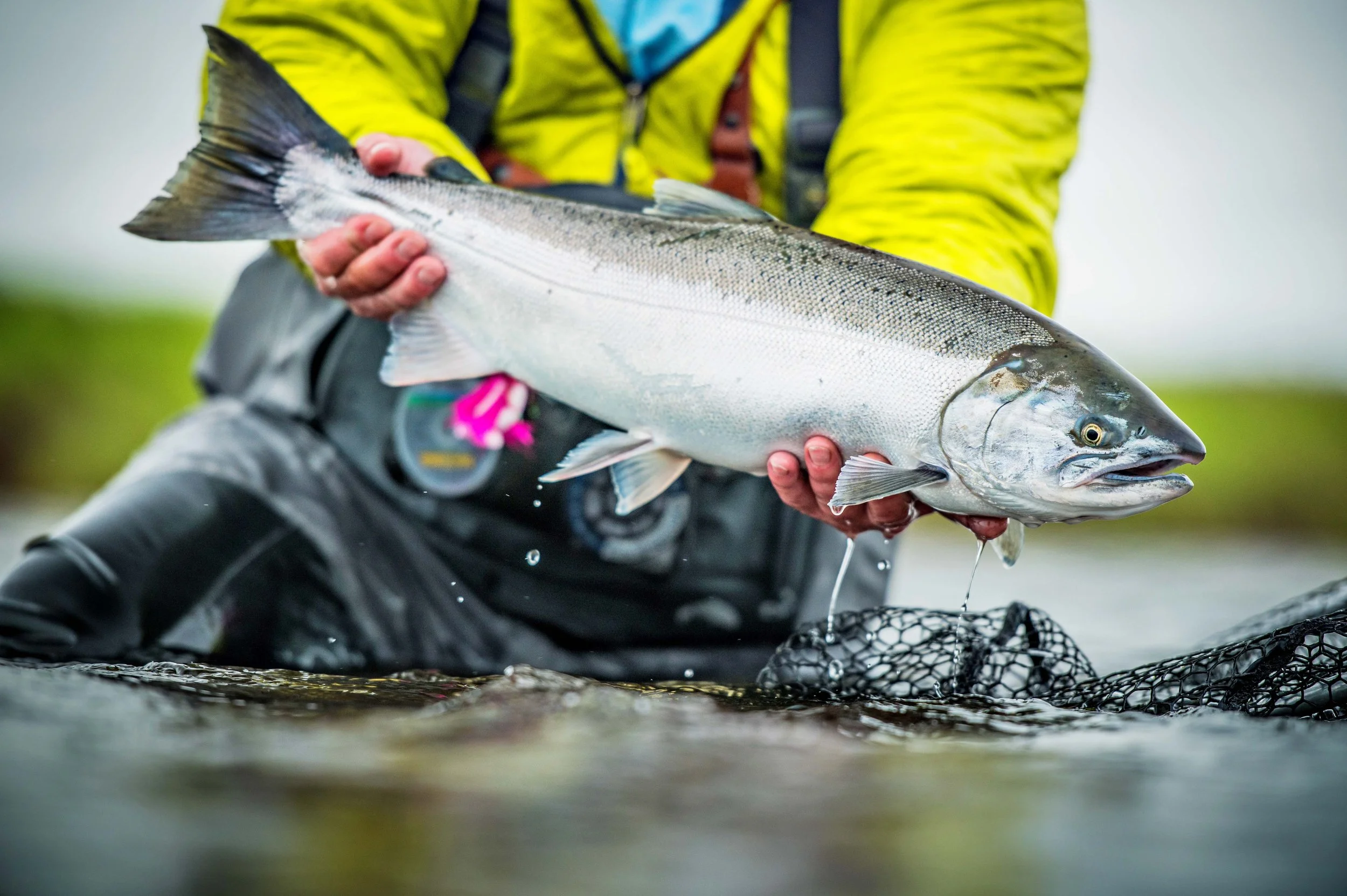
Silvers are the season's exclamation point. They pour into the lower river in waves, and the lodge accesses miles of water built for them — surface-eating fish that will chase down a stripped streamer or detonate on a popper worked across the top. When a fresh pod moves in, the fishing can get genuinely frantic; you learn to pace yourself, because the numbers and the size will wear you out before the fish do.
These are classic peninsula cohos, and they hold and travel through shallow, easily-waded runs where most presentations happen inside thirty feet. We fish them on a single-handed 8-weight, and a floating line covers the great majority of situations. Our guides carry strong leader material and a fly selection these fish can't leave alone, so there's nothing you need to bring but a willingness to strip fast and hold on. Prefer to fish your own flies? The fish won't mind, and neither will we.
The run only builds as the calendar turns, with progressively larger numbers stacking into these short coastal rivers through the end of September — a fish-filled close to a season that goes out swinging.
silver season
what we provide
-
flies & terminal tackle
Guides carry strong leader & a fly selection these fish can't resist; no need to bring your own.
-
expert guides
Seasoned spey & single-hand casters who coach every skill level, beginner to veteran.
-
boat & fly-out access
Jet boats & float planes put you on the best water every day, weather permitting.
-
rods & reels available
Prefer to travel light? We have quality setups on hand if you'd rather not bring your own.
-
all meals & lodging
Private cabins, hearty gourmet food & a warm lodge to come back to each day.
-

round-trip transfer from king salmon
We handle the final leg in by float plane once you reach town.
need help planning your trip?
Whether you're a seasoned angler or planning your very first fishing trip, we'll help you choose the week that's right for you and create an Alaska experience you'll never forget.